AR-15 Barrel Length Comparison: What Recreational Shooters Should Know
Posted by Blackjacket Munitions on Oct 8th 2026
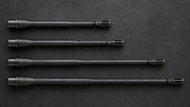
AR-15-style firearms come in many configurations, and barrel length is one of their most visible differences. Four lengths that frequently appear in discussions are 10.3 inches, 11.5 inches, 16 inches, and 18 inches.
For recreational shooters, understanding those measurements starts with separating three subjects: the firearm’s physical dimensions, ammunition velocity, and accuracy. These are related, but a barrel-length number alone cannot describe all three.
Comparing the Four Barrel Lengths
The following comparison describes physical dimensions. It does not rank the firearms by ballistic performance or target accuracy.
| Barrel length | Physical comparison | What the measurement does not tell you |
|---|---|---|
| 10.3 inches | Shortest barrel in this group | Complete firearm weight, overall length, or accuracy |
| 11.5 inches | 1.2 inches longer than a 10.3-inch barrel | Whether the complete firearm will feel substantially different |
| 16 inches | 4.5 inches longer than an 11.5-inch barrel | Whether it will produce smaller target groups |
| 18 inches | 2 inches longer than a 16-inch barrel | Exact ammunition velocity or overall shooting comfort |
Barrel length is only one part of the firearm’s dimensions. Stocks, receivers, muzzle accessories, and other components also affect overall size and weight.
Shorter Barrels and General Handling
A shorter barrel can reduce the amount of firearm extending forward of the receiver when other dimensions remain comparable. That difference can matter when considering storage, transport, and the space a firearm occupies at a range bench.
However, shorter does not automatically mean lighter. Barrel thickness, materials, and accessories also contribute to weight. Two firearms with different barrel lengths may have similar overall weights—or distribute that weight differently.
For that reason, a 10.3-inch versus 11.5-inch AR-15 comparison should distinguish barrel measurements from the dimensions of the complete firearm.
Understanding Barrel Length and Velocity
Muzzle velocity describes how fast a projectile travels as it leaves the barrel. It is a measurement of speed, not a measurement of accuracy.
Ammunition manufacturers publish velocity figures obtained under specific testing conditions. Hornady explains that its published figures come from SAAMI-specification test barrels and that individual firearm chambers and barrels can produce different results. The number printed on an ammunition box therefore is not a guaranteed reading for every firearm.
When reading an AR-15 barrel length and velocity comparison, pay attention to what the figures actually represent. Results from different ammunition products, firearms, or testing conditions should not be treated as directly interchangeable.
A single barrel-length measurement cannot establish an exact velocity.
Does a Longer Barrel Mean Better Accuracy?
A longer barrel does not automatically make a firearm more accurate.
In everyday range discussions, shooters often use “accuracy” to describe how closely shots cluster together. More precisely, precision describes that grouping, while accuracy describes how closely the shots correspond to the intended point of impact.
Barrel manufacturing quality is one contributor to consistent results. Savage Arms describes bore alignment, rifling, and finishing as parts of its barrel-production process that support repeatable accuracy. Those characteristics are separate from barrel length.
Consequently, an 18-inch versus 16-inch AR-15 barrel comparison cannot establish an accuracy winner from length alone. The same principle applies when comparing 10.3- and 11.5-inch barrels.
Velocity figures and target-group measurements answer different questions.
Barrel Length Also Has Legal Significance
The distinction between short and longer barrels is not solely a matter of dimensions.
Under federal law, a firearm classified as a rifle with a barrel under 16 inches generally falls within the National Firearms Act’s short-barreled-rifle provisions. Overall length and the firearm’s complete configuration also matter. A 16-inch barrel alone does not resolve every classification question.
Confirm current federal, state, and local requirements with a qualified dealer or firearms attorney before acquiring or changing a configuration.
Frequently Asked Questions
Is an 11.5-inch barrel much longer than a 10.3-inch barrel?
The barrel-length difference is 1.2 inches. Differences in the complete firearms’ dimensions depend on their other components.
Is an 18-inch barrel automatically more accurate than a 16-inch barrel?
No. Barrel length alone cannot establish accuracy or precision.
Will my firearm match the velocity printed on the ammunition box?
Not necessarily. Published velocity reflects the manufacturer’s testing conditions, and individual firearms can produce different results.
Understanding the Complete Firearm
The most useful recreational-shooting comparison considers more than one specification. Barrel length describes a dimension; velocity describes projectile speed; accuracy and precision describe target results.
For Blackjacket Munitions readers learning about AR-15-style firearms, keeping those distinctions clear makes specifications and range reports easier to understand.